
Aviator is a crash game by Spribe built around an increasing multiplier and a plane that can disappear at any point. Beginners often treat it like a test of prediction, but the main decisions are simpler: whether to practise first, how much to stake, when to cash out, and when to stop.
This guide explains those decisions using the game’s stated mechanics and numbers. It focuses on five common mistakes: skipping demo mode, staking too much, trusting manual timing, chasing losses, and reading charts as if they can forecast the next round.
How Aviator Works
Aviator is a crash game with an increasing curve that can crash at any time. Each round usually lasts about 8-30 seconds, with 60-90 rounds possible in an hour.
The multiplier starts at 1.00x and rises after take-off. A player must cash out before the crash to receive the current multiplier. If the crash occurs first, the stake for that bet is lost.
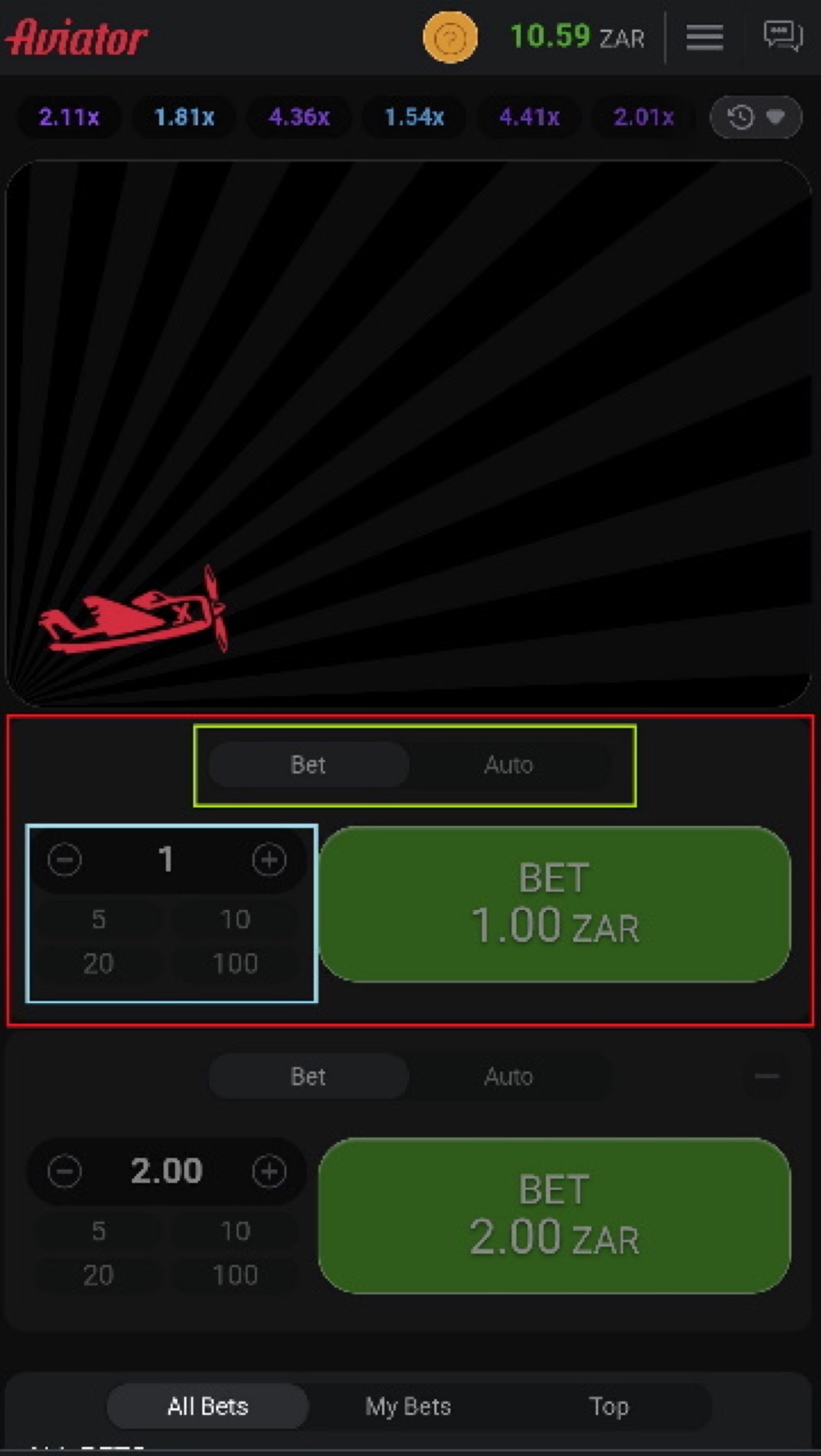
Aviator mobile view with the round controls and multiplier display.
Spribe describes the result as provably fair. Before each round, the server publishes a SHA-256 hash of its server seed. Client seeds from players are combined with it, and the crash point is fixed before take-off.
After the round, the inputs are revealed and can be checked with the verification tool inside the game. Neither the operator nor Spribe can change the result after the round starts. This process proves how the result was committed; it does not make the next result predictable.
- Aviator is a crash game, not a slot.
- The game has no bonus round.
- Each round has two bet panels.
- Each panel can have a separate cash-out.
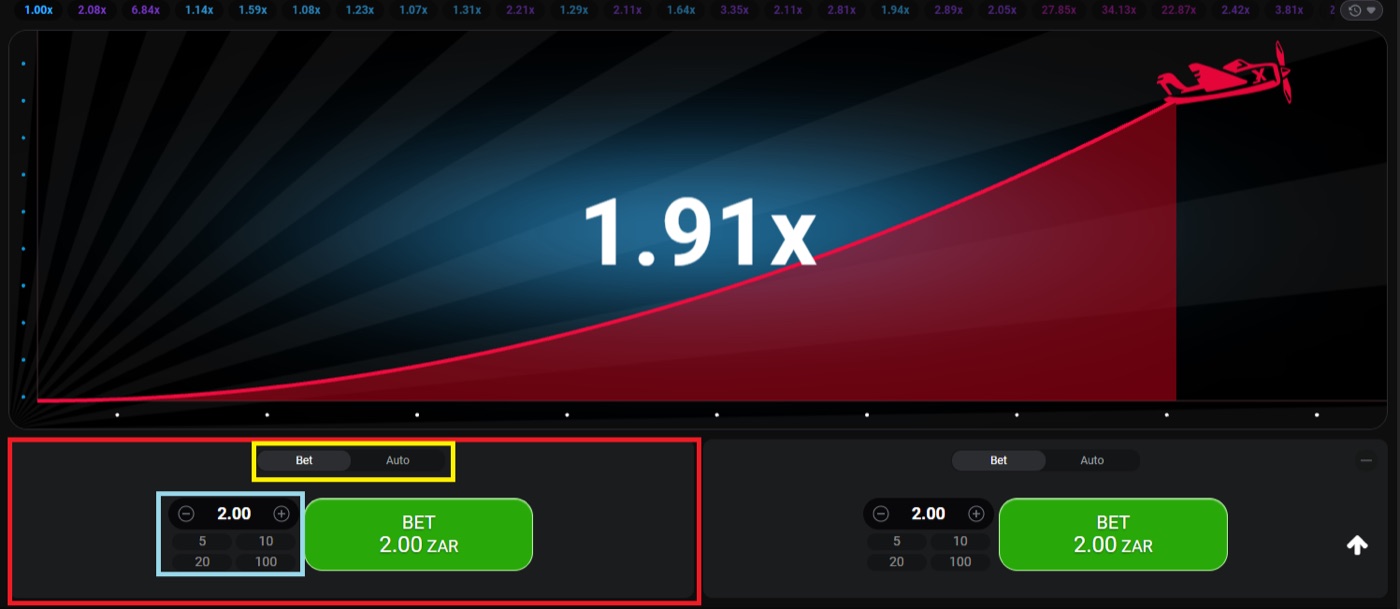
- The Bet and Auto tabs control different ways to place a bet.
The displayed history shows previous multipliers, while the live bets panel can show All Bets, My Bets, or Top results. These features describe earlier or current activity. They do not alter the fixed result of a future round.
The game’s RTP is 97%, which corresponds to a 3% house edge. Expected value is minus 3% of the stake at every cash-out target, so changing a target changes variance but not the edge.
| Target multiplier | Chance the round reaches it |
|---|---|
| 1.2x | 80.8% |
| 1.5x | 64.7% |
| 2x | 48.5% |
| 3x | 32.3% |
| 5x | 19.4% |
| 10x | 9.7% |
| 20x | 4.85% |
| 50x | 1.94% |
| 100x | 0.97% |
About 3% of rounds, or roughly 1 in 33, crash instantly at 1.00x. The game is therefore high variance even when a player uses a low cash-out target.
Why Demo Mode Matters
Aviator has a demo mode that needs no registration. The demo works in desktop, tablet, and mobile browsers, including devices built for low bandwidth.
Skipping demo mode removes a way to learn the interface without risking a stake. It does not remove the 3% house edge, but it can help a beginner understand the timing of a cash-out request and the difference between the two bet panels.
- Open the demo and identify the Bet and Auto tabs.
- Watch the multiplier rise and note when the round ends.
- Practise setting an Auto Cash-Out value.
- Check how each of the two panels handles its own bet.
- Use the history only as a record of earlier rounds.
Demo mode is not a prediction tool. A sequence seen in demo play does not provide a signal for real play, because rounds are independent and the crash point is committed separately before each round.
It is also useful for learning the interface on a small screen. The game includes typical quick-stake buttons, a live bets panel, in-game chat, and a Provably Fair badge. A beginner who knows where these controls are has fewer interface decisions to make during a live round.
What Demo Cannot Show
Demo mode cannot turn a negative expected value into a positive one. It also cannot establish a reliable “safe” multiplier, because the probability of reaching a target remains the same calculation for the game.
For example, a 1.5x target is reached by 64.7% of rounds in the stated probability table. That percentage does not mean that the next ten rounds will contain a fixed number of 1.5x results. It is a probability for each round, not a schedule.
How Much to Stake
Typical Aviator stakes run from about $0.10 to $100 per bet, but the available range depends on the operator. A commonly cited guide rule is to risk no more than 2% of a bankroll per round.
The 2% figure is a risk-control guideline, not a way to overcome the 3% house edge. A smaller stake limits the money exposed in one round, while a larger stake increases the effect of both wins and losses.
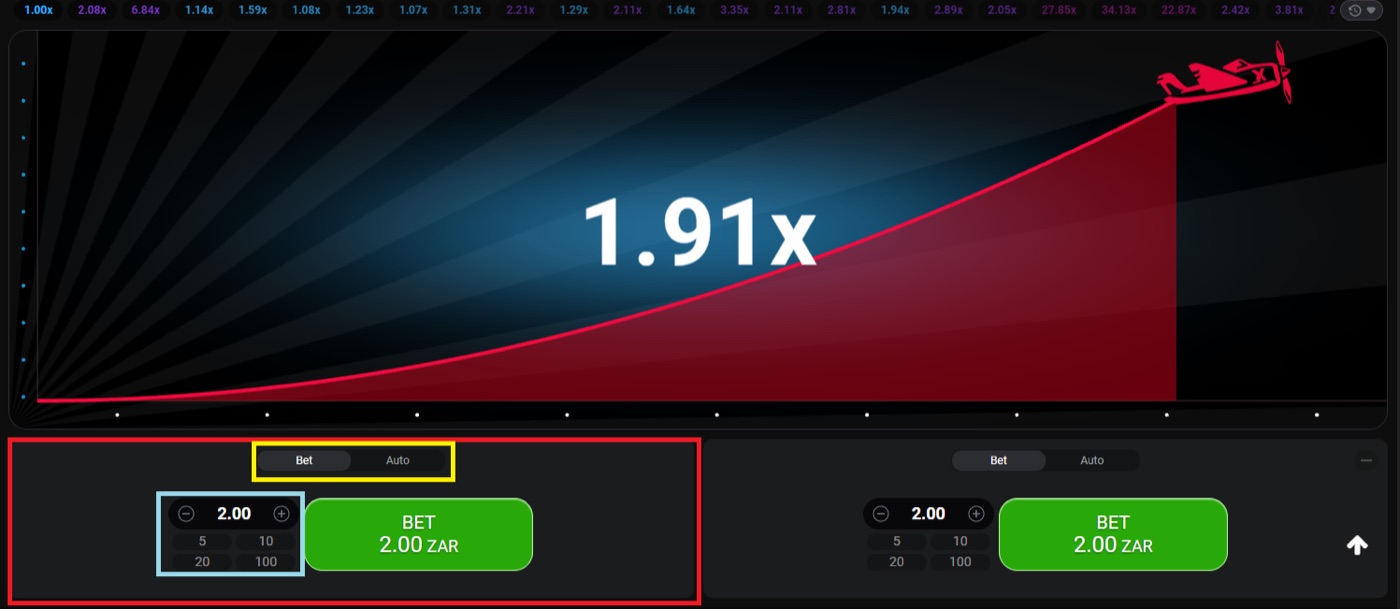
Aviator desktop round at 1.91x with two separate bet panels.
Suppose a player has a $100 bankroll and follows the 2% guideline. The stake for one round would be $2. If that bet cashes out at 1.5x, the return is $3, including the original stake, and the net gain is $1. If the round crashes before cash-out, the loss is $2.
The example does not predict a result. The 1.5x target is reached by 64.7% of rounds, so it is not reached every time. The expected value remains minus 3% of the stake at that target.
- Choose a fixed amount before the round begins.
- Keep the amount within the operator’s available stake range.
- Apply a bankroll percentage consistently instead of raising the stake after a loss.
- Set a loss limit before playing.
- Set a win limit before playing.
A two-bet split is another arrangement described in guides. One bet may use a lower target such as 1.5x-2x, while the other is left for a higher target such as 5x-10x. The split changes how results are distributed between the two panels, but it does not change the house edge.
If you compare a crash game, its multiplier, cash-out rules, and stake settings before choosing a bookmaker, the betway aviator app download may appear during that research, but the link itself does not change any Aviator result or operator rule.
Responsible gambling means using only money you can afford to lose and stopping when the preset limit is reached.
Why Manual Timing Fails
Manual cash-out depends on a request reaching the server before the crash. The multiplier can rise for only a few seconds because Aviator rounds last about 8-30 seconds.
A player may see 1.91x on the screen and press Cash Out, but the request still has to reach the server in time. A cash-out time-out can result from latency or a slow device, and the request fails if it arrives after the crash.
Manual timing therefore creates an execution problem, not a forecasting advantage. It cannot reveal the committed crash point, because that point is fixed before take-off and is not visible through the rising curve.
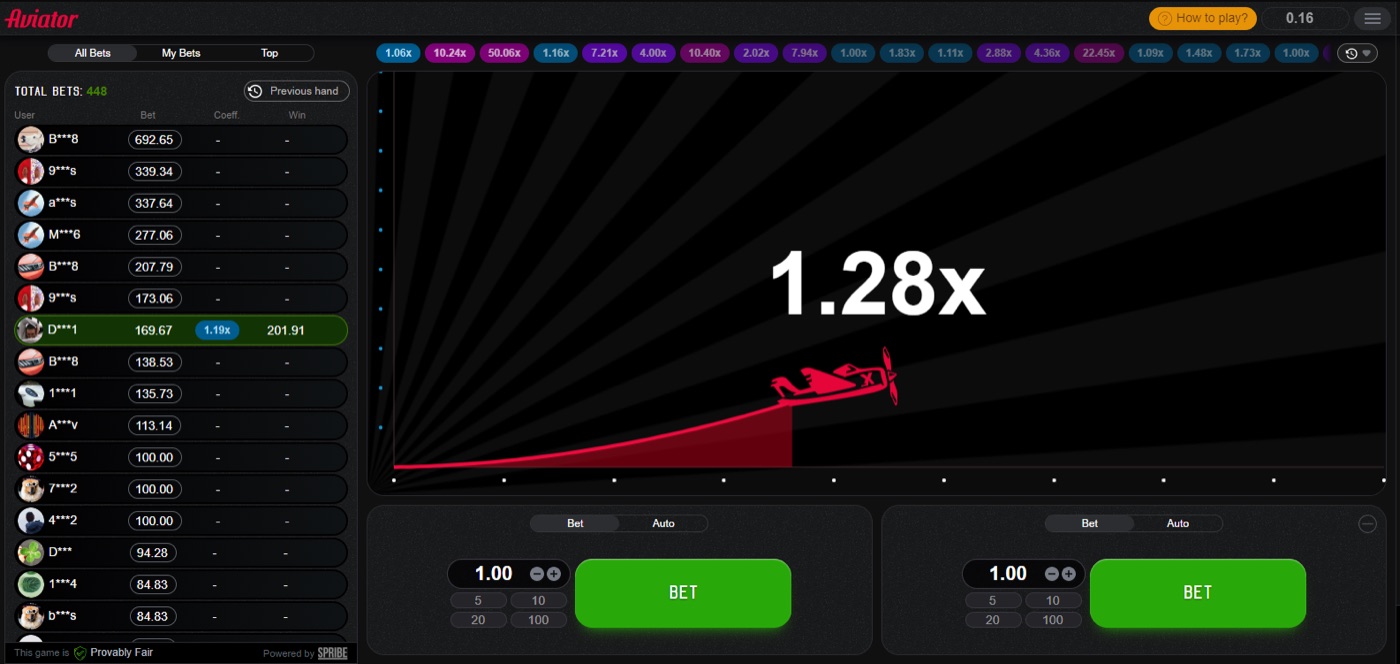
The Aviator game screen shows the plane in flight before the crash point is revealed.
Auto Cash-Out lets a player set a preset multiplier. When the round reaches that value, the game attempts to cash out automatically. Auto Play can also run for 10-100 rounds with stop-on-win and stop-on-loss settings.
- Manual cash-out requires a timely request.
- Auto Cash-Out uses a preset multiplier.
- Auto Bet and Auto Play can repeat bets for 10-100 rounds.
- Stop-on-win and stop-on-loss can end an automated sequence.
- Neither mode changes the probability of the crash point.
Consider a player who chooses 2x. The probability table gives that target a 48.5% chance of being reached. Manual pressing cannot raise 48.5% to a higher percentage. It only determines whether the request is sent before the round crashes.
Timing Is Not Prediction
Watching the plane closely can create a feeling that a crash is near or overdue. The game rules provide no such signal. A previous 1.00x crash does not make a high multiplier due, and a long flight does not prove that another long flight will follow.
Connection quality can affect the practical experience of a manual cash-out. It cannot affect the committed crash point. This distinction explains why a player can understand the displayed multiplier correctly and still miss the cash-out request.
Why Chasing Losses Grows Risk
Chasing losses raises the next stake after a previous loss. The Martingale system doubles the stake after each loss and reaches 1,024 times the base stake after 10 losses.
The 1,024x figure shows how quickly a recovery plan expands. It does not show that a win is due after 10 losses, because Aviator rounds are independent.
For example, a $1 base stake becomes $2, $4, $8, and continues doubling after each loss. After 10 consecutive losses, the next planned stake would be $1,024. The earlier losses would total $1,023, so the required amount is not a small adjustment.
- Losses do not make the next round more likely to reach a target.
- A higher stake increases the money exposed to the next result.
- Operator stake limits can prevent a planned recovery bet.
- A fixed loss limit can stop a losing sequence from expanding.
- Fibonacci and D’Alembert also do not beat the 3% edge.
A loss-chasing plan also conflicts with the 2% bankroll guideline. If the base stake is 2% of the bankroll, doubling it makes the next bet 4%, then 8%, before the tenth step reaches 2,048% of that original bankroll-based stake.
No betting system changes the expected value. The stated expected value is minus 3% of the stake at every cash-out target, whether the stake is fixed, doubled, or increased under another sequence.
Why Charts Mislead Beginners
Aviator displays a history of previous multipliers at the top of the game. That history records completed rounds, but it does not calculate the next crash point.
Rounds are independent, and the crash point is committed by hash before take-off. A graph, pattern, strategy chart PDF, or claimed best time to play cannot change the odds of a future round.
- A run of low multipliers is not a promise of a high multiplier.
- A recent high multiplier is not a reason to expect another high result.
- A chart cannot reveal the server seed before the round ends.
- Playing off-peak may provide a smoother connection, not better odds.
- Public “signal” bots resell math and cannot predict the committed result.
Take a history showing 1.20x, 1.50x, and 2.00x. A beginner may read it as a pattern that points to 3x. The probability of reaching 3x remains 32.3% for the next independent round. The earlier three values do not add evidence that changes that percentage.
The same applies to a chart showing many high results. A 10x target has a stated probability of 9.7%, and a chart cannot make that target more likely because several previous rounds reached it.
What Fairness Checking Does
The verification tool can check the inputs used after a round. It can show whether the revealed result matches the published hash and combined seeds.
That check addresses whether the round followed the provably fair process. It does not provide a calculator for predicting a future crash. A predictor app, a Telegram bot, or a version label such as “v4.0” cannot bypass the hash commitment.
Aviator FAQ
Aviator has a demo mode that needs no registration. Spribe launched Aviator in early 2019, with the first live launch on Adjarabet in February 2019.
The game uses a rising multiplier, a fixed crash point, and a cash-out request. The answers below separate those mechanics from the claims that beginners often attach to them.
Can an app predict Aviator?
No prediction app can determine the crash point before the round. The point is fixed before take-off through the provably fair process, and the inputs are revealed only after the round.
How can I play Aviator for free?
Aviator has a demo mode that needs no registration. The demo lets a player inspect the controls and round flow without placing a real stake.
Is Aviator rigged?
The game uses a server hash, client seeds, and a verification tool inside the game. Those features allow the completed round to be checked, but they do not make future results predictable.
Why did my cash-out time out?
A cash-out request must reach the server before the crash. Latency or a slow device can delay the request, so a player may see a multiplier and still miss the cash-out.
Does a chart show when to bet?
No. Previous multipliers describe earlier independent rounds. They do not alter the probability of the next round, and playing off-peak can improve connection smoothness but not the odds.
Does a larger stake improve the chance of winning?
No. The stake changes the amount won or lost, not the probability that a multiplier is reached. Expected value remains minus 3% of the stake at every cash-out target.